Choosing the ideal furnace filter and changing it when it becomes dirty is as important to your HVAC system as changing the oil is to your car. Each plays a crucial role in keeping its system operating safely, efficiently and for a long time.
An overused furnace filter loses its effectiveness, enabling potentially harmful particles to move through your home. It also restricts airflow, which can damage your furnace and reduce its life span.
Making certain your furnace uses a clean filter that is suitable for your needs is not only about keeping your furnace working efficiently. It’s also about creating excellent indoor air quality for your home.
Your health is important to the heating specialists at Assured Appliance & Heating & Air. We've long worked with an eye on bettering indoor air quality in Genoa. Here, we’ve answered frequent questions about HVAC filters, including that very tricky question of what direction do you point a filter in your furnace or air conditioner?
How Often to Replace the Air Filter in a Furnace
It is vital to replace dirty air filters in a furnace or air conditioner periodically. Dirt-clogged filters cause the system to worker harder than it should because it takes extra work to force air through the plugged-up filter.
Officials suggest checking your furnace filter every month and replacing it if it’s dirty. You’ll know if your filter needs changing because it will filled with dirt or dust. Those who have pets will probably need to replace their furnace air filter more often, because a good air filter will trap pet hair circulating in a home.
Locating Your Furnace's Air Filter
In general, a furnace air filter is normally found in the return air duct or blower compartment before the return air goes back into the furnace. This makes sure air being pulled into the system is filtered before it passes through the furnace components and is heated.
Depending on the furnace model, the filter may be positioned on the right, left, bottom or in some cases, inside the furnace. It's typically housed inside of a slot, frame or cabinet for easy access and replacement. Always refer to your furnace's owner manual for details concerning filter location of your particular brand and model of furnace.
Is My Furnace Filter Just a Type of Air Filter?
The easy answer is, yes. In HVAC, a furnace filter and an air filter or AC filter are essentially the same. While people may call them different things based on the current season— summer or winter—they are all filters that clean the air in your home.
They each eliminate dust, allergens, bacteria and other particulates from the air that is drawn into the furnace and air conditioning system, ensuring the air flowing through your home is clean and safe.
What Are MERV Ratings and What Rating Is Best for Me?
Once you locate your old furnace filter and decide when it should be substituted for a clean one, it’s time to pick a replacement. That means deciding on the level of filtration that you need. One method to do this is by selecting an appropriate MERV rating for your needs.
MERV is short for Minimum Efficiency Reporting Values. The MERV rating indicates the effectiveness of air filters at trapping airborne contaminants. The rating scale ranges from 1 to 20, with greater numbers indicating the power to filter tinier particles.
Experts say a filter with a MERV rating between 8 and 13 offers an appropriate balance between having healthy indoor air quality without overly restricting airflow. However, people with some health conditions may need a a higher MERV rating.
How to Place the Air Filter in a Furnace or Air Conditioning System
Installing an air filter in a furnace or air conditioner the proper way is necessary for the efficient operation of the heating or cooling system. Air filters are supposed to face a certain direction, indicated by an arrow located on the side of the filter frame. The filter should be put in with this arrow pointing in the direction of the furnace or air conditioning unit, which is the direction of the airflow. If you're doubtful about the airflow direction, try to remember that air always moves from the return duct towards the heat or cooling source. Therefore, make certain the arrow points toward the furnace or AC.
Many people are confused by which direction to install an air filter. To help remember, consider taking a picture with your mobile phone after the filter has been accurately installed by a professional. Or, you also could ask a technician to use a marker to write on the outside of your furnace which direction the filter should point. A great time to do this is during a regular furnace maintenance call.
How to Change a Furnace Air Filter
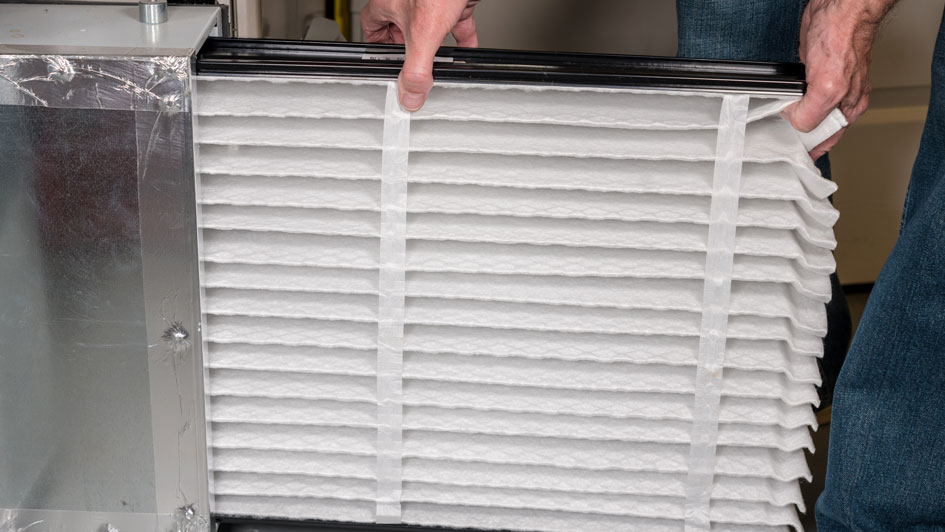
Switching out the filter on your furnace or air conditioning system is a quick and easy process. Here is a step-by-step list of how to retreive a dirty air filter and swap it for a new one:
- Turn off your furnace: Make sure to shut off your furnace before beginning the process.
- Find the furnace filter: Typically, the filter is found inside the furnace or in the air return vent. Take note of which direction the arrow points on the filter, because you’ll want the arrow on the new filter to point the same way.
- Remove the old filter: Be careful not to knock out any dust or debris.
- Note the date: Write down the date you changed filters on the new filter's frame. This will make it easier to keep track of when it's time for you to change it again.
- Slide in new filter: Put in the new filter with the arrow pointing in the direction of the furnace, which is the direction of airflow and should be the same direction the arrow pointed on the old filter you are replacing.
- Secure the filter: Make sure the new filter fits correctly and close any latches or clips that hold it in the compartment.
- Turn on your furnace: Once the new filter is completely secured, you can turn your furnace back on.
Can a Dirty Air Filter Cause a Furnace Not to Work?
The short answer is, yes, a dirty air filter can cause a furnace to stop working or decrease its lifespan. Changing your furnace or AC filter is one of the simplest things you can do to keep your system operating correctly.